-
Bargaining Update: Expecting Big Moves from Administration
Dear FAMCO Members,
We write with a Monday morning update on the status of last week’s contract negotiations.
As of today, FAMCO has been negotiating for six months with the MU administration to settle on a fair contract for faculty, not only during this critical time in higher education more broadly, but at a time when we know many of our members are struggling to find the resources to do a good job for our students, and also their families.
While the parties have been able to reach tentative agreements on important non-economic items that our members care about, as of last week, the administration’s proposals on salary and healthcare increases still fall far short of what our members need and deserve. In fact, the administration has not, in effect, moved much at all on their non-starter positions since they first put down their economic proposals.Nonetheless, last week, in a good faith effort to narrow the large gaps between the administration’s troubling position on compensation and healthcare costs and FAMCO’s proposals to provide meaningful salary increases that are not washed out by inflation and healthcare expenses, the union took a major step towards the administration in our counter proposals.
In doing so, the administration’s team recognized FAMCO’s commitment to move toward settlement, and signaled that they were ready to return proposals to us that reflected their own willingness to advance toward a fair deal.
We are back at the bargaining table on Tuesday, August 27th, and it is FAMCO’s expectation that the administration will also take significant steps away from their initial economic proposals that our membership has found to be out of touch with the reality of what we do as faculty who are core to the academic mission, and also where we do it as faculty laboring in a high cost region.This week, our FAMCO field team will be reaching out to members to let you know how you can continue to let President Leahy and the MU Board of Trustees know that you expect they will work hard to SEAL a deal with FAMCO before Labor Day so we can all focus on a smooth start to the fall semester.
Once again, we want to recognize the members of the full-time faculty who have signed on to the open letter of support for the bargaining team as we continue to press forward toward a settlement we deserve! Currently, over half of the full-time faculty have now signed on to the open letter calling for a fair deal! If you haven’t signed on to the letter yet, you can find it here: https://forms.gle/cKQCbpCK2ChpYrbX8.
Also, a shout out to all of our members who shared public testimony last week on why a strong contract matters to you. Below is a link to a short (6 min) video clip of some of your statements that were recently released on social media. We encourage you to take a look and share widely as well.
We are at a critical crossroads in our negotiations, and look forward to returning to our members next week with news that the administration is willing to make meaningful concessions that allow us to reach a fair agreement.
Stay tuned-
The FAMCO Bargaining Team
John Comiskey
Megan Delaney
Johanna Foster
Gabrielle Hackenberg
Rose Knapp
Sue Starke
Marina Vujnovic -
FAMCO BARGAINING UPDATE: AUGUST 8, 2024
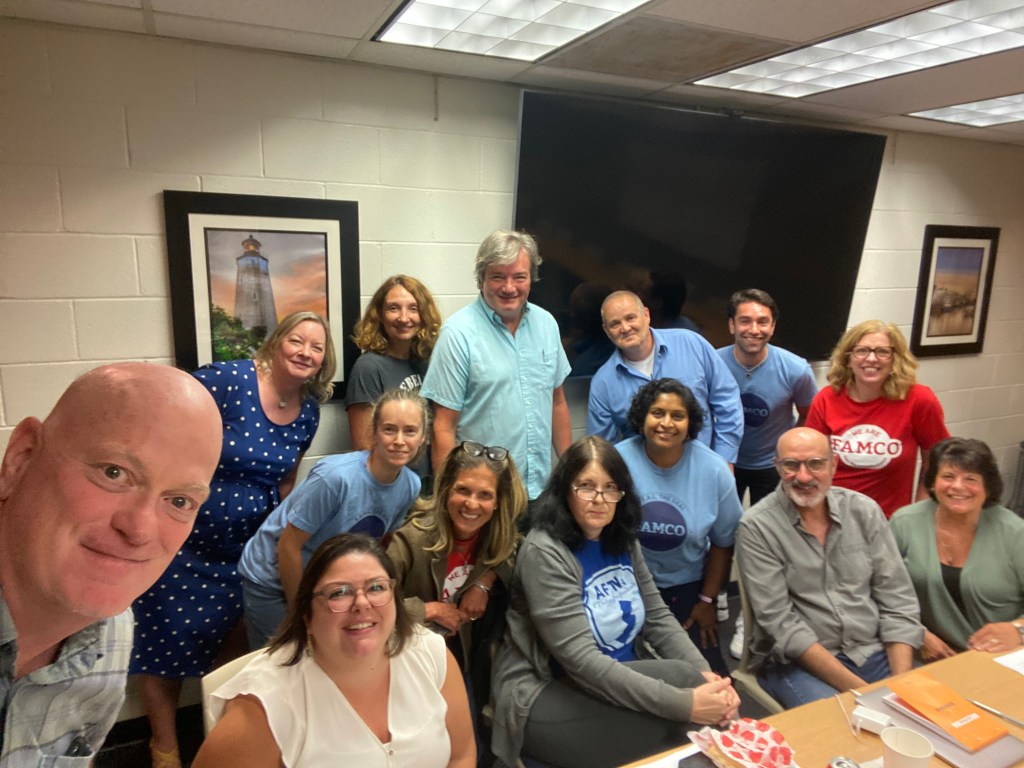
Top from left to right: Sue Starke; Marina Vujnovic; Bill Byrne; Aaron Furgason; Nick Messina. Middle from left to right: John Comisky; Laura Turner; Sanjana Ragudaran; Megan Delaney. Bottom left to right: Gabi Hackenberg; Johanna Foster; Lisa Iannucci; Mark Ludak; Rose Knapp; Not in photo: Tom Carey.
The Administration Hardly Moves
on Insulting Economic ProposalsYesterday, August 8, the FAMCO bargaining team returned to the negotiating table to continue our discussions to ensure salary equity, economic and healthcare security, and a stable workforce for our members and our students. We left the table sorely disappointed that the administration has chosen to hold steady on their insulting across the board proposal for 1%, 1.5% and 2% increases to base salaries, modifying their initial compensation proposal only nominally to permit faculty in select ranks to choose between a 1% increase *or* a $2000-$2500 base increase in year one only.
Additionally, on other proposals of concern to our members, the administration continued to refuse to make any increases at all to our retirement contributions, and stood firm on their goal to move our fixed healthcare rate structure to an unstable variable rate structure (think: “balloon mortgages”).
In fact, after 5 months of repeated requests for the methods used to calculate their healthcare cost projections, the administration continues to delay providing the information, conjecturing in yesterday’s session for the first time that the information may be proprietary. In previous negotiations, the administration provided rate development information to FAMCO to permit informed negotiations. This time, and with President Leahy’s hired gun law firm and a new university healthcare consultant, that information has yet to be disclosed. Nonetheless, the administration expects faculty to agree to a healthcare cost structure without any access to the rate development methodology or without any finalized projections.
In what we hope is a sign of progress, the administration indicated they would be willing to modify their healthcare proposal to address our concerns about “balloon” payments by continuing the fixed cost structure for one more year, and then continuing with the variable structure that would be capped at the percentage not yet known to us. We will be eager to see the details of that modification next week.
Administration Claims Equity Adjustments Would Mean “Overpaying” Faculty
Additionally, the administration continues to refuse to engage with us in any meaningful discussion around closing the massive gaps in salaries within ranks by discipline and gender at MU. Citing what amounts to a black box “the market makes us do it” argument, the administration’s rationale included their assessment that leveling up the salaries of faculty in the lower tier salary bands, which also largely map onto feminized disciplines, would be “overpaying faculty” that they can already hire at low “market rates,” suggesting to us that they are willing to continue undervaluing many faculty relative to others simply because they can.
Administration Outright Rejects Plan for Tenure Paths for Non-Tenure Stream Faculty
In a real surprise given Provost Veit’s previously documented support for select recommendations to tackle our recalcitrant problem of overreliance and exploitation of contingent faculty, the administration also rejected FAMCO’s entire comprehensive proposal to address these structural challenges, including a carefully crafted plan to provide a path to tenure for our non-tenure stream faculty who make up nearly 40% of our full-time ranks.
“Not Every Dollar Can Be Pumped into Faculty Paychecks” and Admin Pay “is the Norm”
On top of the unwillingness to move toward FAMCO’s economic proposals in a way that signals to us that they are hearing member concerns about salary inequities, and ones that have not kept pace with costs of living, the administration’s external lawyer also insulted faculty who questioned the university’s lack of transparency on the administration’s healthcare increase projections, and continued to deflect our concerns about economic security, citing that the average MU faculty pay is “within market” and even “top tier.” Despite our members’ repeated and compelling articulations of the mismatch between real faculty earnings and the realities of costs of living, the administration’s external counsel leaned on a vague narrative that the university needs to be “well-rounded” and continued the claims that faculty are simply asking for more than we deserve as “every dollar cannot be pumped into faculty paychecks.”
This, despite the recently released IRS 990 that shows MU’s 2023 net income as 13 million (https://projects.propublica.org/nonprofits/organizations/210634584); our current enrollment numbers that have cleared President Leahy’s stated operational threshold; the securing of 3 million in state funding for capital projects as announced by Senator Vin Gopal; and the celebrated 20 million from donors for the development of the Bruce Springsteen Archives and Center for American Music. To add to these accomplishments, just last week, we all learned of the new corporate deal with Hackensack Meridian Health (HMH) that includes an expansion of the Ocean First Bank Center footprint and a new partnership with HMH to, in effect, outsource student health services.
Yet, when pushed to answer for how their “faculty salaries are within market” rationale squares with excessive pay for our senior administrators, including the now nearly one million dollar estimated total compensation for President Leahy, the administration’s lawyer defended administrator compensation levels as “the norm.” In fact, Provost Veit, normally a champion of faculty, sided with external counsel yesterday in a markedly combative alignment against the bargaining team when we challenged their unsubstantiated austerity narrative.
Signs of Limited Progress
In limited ways, the administration moved on several economic items, including the positive news that they accepted FAMCO’s proposal for modest promotion base pay increases, as well as our proposed minor increases to select travel funding caps. At present, they have also agreed to a $40 increase to the minimum summer teaching pay per credit load hour.
Overall, Disappointing Week and Expect Administration to Do Better
We remain disappointed with our senior leadership and deeply troubled by the message of disregard and disrespect that their proposals send to us, to our students, and to the larger Monmouth University community. It’s almost as if President Leahy and his team want us to leave the work to which we are so committed, and to be challenged at every turn in our desire to serve our students well.
We maintain hope and confidence that this is not the case. We are ready to return to the table next week to hear the administration’s promised responses to our latest proposals, and to find a viable way forward toward a compensation, healthcare, and stable workforce package that, instead of the stunningly miserly provisions, provides for equity, real earnings adjustments, and affordable, low-risk healthcare plan choices for our faculty.
As we continue to hear of the important accomplishments that President Leahy and his cabinet have achieved in their recent publicly celebrated successes this summer, we know that Monmouth continues to be a thriving place that, while affording our senior administrators unusually generous salaries, can also afford compensation and benefits packages for employees that, at the very least, keeps them at pace with our rising costs of living.
Shout to Our FAMCO Members!
As always, we are proud to report that our members have continued to step up to voice their support for a strong contract, and we want to recognize our good colleagues who joined us this week as observers at the bargaining table (see below)! We also want to recognize the nearly 140 members of the full-time faculty who have signed on to the open letter of support for the bargaining team as we continue to press forward toward a settlement we deserve! If you haven’t signed on to the letter yet, you can find it here: https://forms.gle/cKQCbpCK2ChpYrbX8.
What Else Can You Do to Help SEAL the Deal?
We invite you to join us as a FAMCO observer this Thursday, August 15 and/or Tuesday, August 27 for our next bargaining sessions. Also, join us on YouTube with your video testimony about why it matters to you, your families, and your students that your own salary and benefits costs have made it difficult for you to keep pace with the cost of living. Reach out to Sanjana Ragudaran (sanjanamaniam@gmail.com) for more information about how you can serve as observers and/or participate as a YouTube Town Hall testifier!
GO FAMCO!
-
Action Update: Over Half of the Full-Time Faculty at MU Sign Open Letter Calling for Real Earnings Increases as Parties Return to the Bargaining Table Next Week.
119 members initially responded and now over half the Full-Time Faculty have signed on to show their support for the Bargaining team as they negotiate for fair pay for Monmouth faculty.
We, the faculty of Monmouth University, write in support of the FAMCO Bargaining Team’s salary proposal. We request that faculty be paid a reasonable salary in return for providing stellar educations to our students. As faculty, we have essentially taken a pay cut over the last contract given that our salary did not keep up with inflation. The salaries most faculty are being given by the Administration are too low to afford living in the counties surrounding our place of employment. Faculty were already finding it difficult to afford middle-class housing, decent healthcare, childcare, eldercare, or to save for retirement, and the cost of living has only risen. In fact, the median Assistant Professor salary is $95,091, yet the pre-tax living wage for a family of four in Monmouth County is $164,195 (https://livingwage.mit.edu/counties/34025). Only 20 individuals in our faculty ranks enough to meet this Monmouth County living wage threshold on their own without partnering up, sharing living expenses with a roommate, or finding a side hustle.
Faculty, all of whom have advanced professional training and degrees and who work hard day in and day out to provide Monmouth University students with stellar educations, deserve a salary that allows them to provide a healthy life for themselves and their families. Monmouth University students come to our institution for the education faculty offer. Faculty provide for our students; it is time Monmouth University provides for its faculty.
As Inside Higher Ed wrote, Monmouth University is a “rare debt-free college.” And, according to independent financial analysis from the AAUP based on Monmouth University data, the institution has solid levels of reserves for its size. The university has had the financial freedom to retire a mortgage early and to pay $1.6 million to switch athletic conferences for example. Monmouth University is thriving. Their faculty should be, too.
#SupportFairPayforFaculty
#AThrivingPlaceKeepsthePaceWe pledge our support for the bargaining team as they negotiate for fair pay for Monmouth faculty
Patrick O’Halloran
Elizabeth Gilmartin-Keating
Dickie Cox
Sue Starke
Natalie Ciarocco
Amanda Stojanov
Jonathan Ouellet
Susan Goulding
Mark Ludak
Corey Dzenko
Michael Cronin
Lisa M. Dinella
Lisa Iannucci
Jen McGovern
Andrea Hope
Jamie Nappi
Jeanne Koller
Mihaela Moscaliuc
Shannon Hokanson
Alena Graedon
Beth Gough
Cheryl Leiningen
Beth Sara Swanson
Kathryn Lionetti
Nick Messina
Bernadette Dunphy
Mary Harris
Paul Urbanski
Frank Fury
Joan Raso, MSN, RN, CHSE
Jamie Pigman, PhD
Patrick Love
Specialist Professor Rick Roberts
Robert Scott
Yun Luo
Jaishree Sharma
Yulin Li
Steve Chapman
Joe Patten
Gary Lewandowski
Lindsay R. Mehrkam
Melissa Alvare
Megan Delaney
Greg Moehring
Kevin Dooley
Jamie Goodwin-Uhler, Ph.D.
Peter Jacques
Manuel Chavez
Bochen Li
Jonathan Daigle
Pauline Papapietro
James Fries
John Burke
Sanjana Ragudaran
Lisa Vetere
Laura Turner
Courtney Wright-Werner
Kenneth Campbell
Tom Baker
Meg Forney
Pedram Daneshgar
Alexis Silverio
Alysson Goodwin
Christa Hogan
Francis Valiquette
Stephanie Bobbitt
Brian Lockwood
Gabrielle Hackenberg
Mike Richison
Michelle Schpakow
Michael Phillips-Anderson
Richard Bastian
Christine Forbes
Patricia Sciscione
Charles Willow
Erin Nau
Jennifer Shamrock
Jiacun Wang
Torrey Gallagher
Lynn Kraemer-Siracusa
Stacy Lauderdale Littin
Richard Scherl
Nikita Burrows
Hillary DelPrete
Nica Davidov
Michelle Scott
Johanna Foster
Melissa Brzycki
Denise Crowley
Jaime Myers
Stephanie Lynch
Kevin Dillon
John Comiskey
Jing Zhou
Frank Damiani
Aaron Furgason
Carson Clements
Jennifer Harpootlian
Heide Estes
Giuseppe Fazari
Scott Jeffrey
Katherine Parkin
Thomas Carey
Peter Liu
Kiameesha Evans
John Buzza
Warren Brown
Susan Meyer
Matthew Tozzi
Ilyong Jung
Kathryn Lubniewski
Jeremy Lackman
Chuck Whedon
Jamie Adler
Wobbe F. Koning
Mikhail Sher
Weihao Qu
Robyn Holmes
Maureen Dorment
John Morano
Joanne Jodry
David Marshall
Davis Jose
Sherry Wien
Anne Deepak
Vecihi Serbay Zambak
Jangwook Lee
Joelle Zabotka
Jangho Gil
Ralph Cuseglio
Minna Yu
Datta Naik
Kerry Carley-Rizzuto
Jeffrey E. Jackson
Joe Palazzolo -
Bargaining Update. Salary Negotiations Begin!
Dear Members,
Below you’ll find the details of the compensation proposal that the FAMCO negotiating team presented to the administration at the bargaining table on July 9th.
In brief, FAMCO demonstrated that the university is 1) in solid financial shape; 2) can afford to compensate faculty fairly; and 3) can afford to restore our lost real earnings while also keeping our salaries at pace with the current cost of living.
For additional background, please also find the in-depth analysis of Monmouth University’s solid financial health conducted by the AAUP for FAMCO, which was also shared with the administration at this week’s session.
Thank you to our great colleagues who joined us in bargaining this week as faculty observers. We encourage all of our members to play a role in our upcoming bargaining sessions in this capacity. Please reach out to Amanda Stojanov, Contract Action Team co-captain, to sign up to observe and to help ensure the strong contract you deserve.
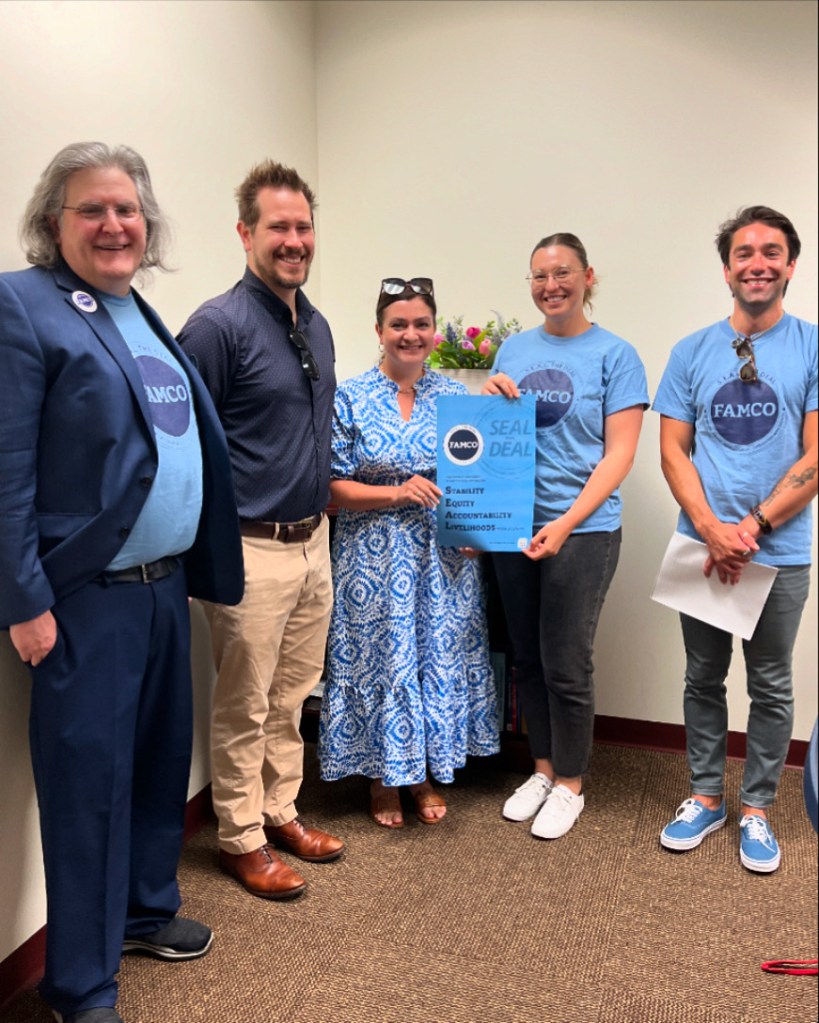
This week’s observers from left to right: Patrick O’Halloran (Economics and Finance), Jon Daigle (Economics and Finance); Pauline Papapietro (Physician Assistants); Amanda Stojanov (Communication); Nick Messina (Communication)
If you have any questions about the presentation attached, or FAMCO’s contract campaign platform, please reach out to any member of the negotiating team.
Sincerely,
Your FAMCO Bargaining Team
John Comiskey
Megan Delaney
Johanna Foster
Rose Knapp
Gabrielle Hackenberg
Sue Starke
Marina VujnovicFAMCO’s proposed plan to achieve fair pay for faculty
In-depth analysis of Monmouth University’s solid financial health conducted by the AAUP for FAMCO
-
FAMCO AFT-AAUP Local 6627, NJ AFT, and NJ AFL-CIO join in solidarity support of SB 1054
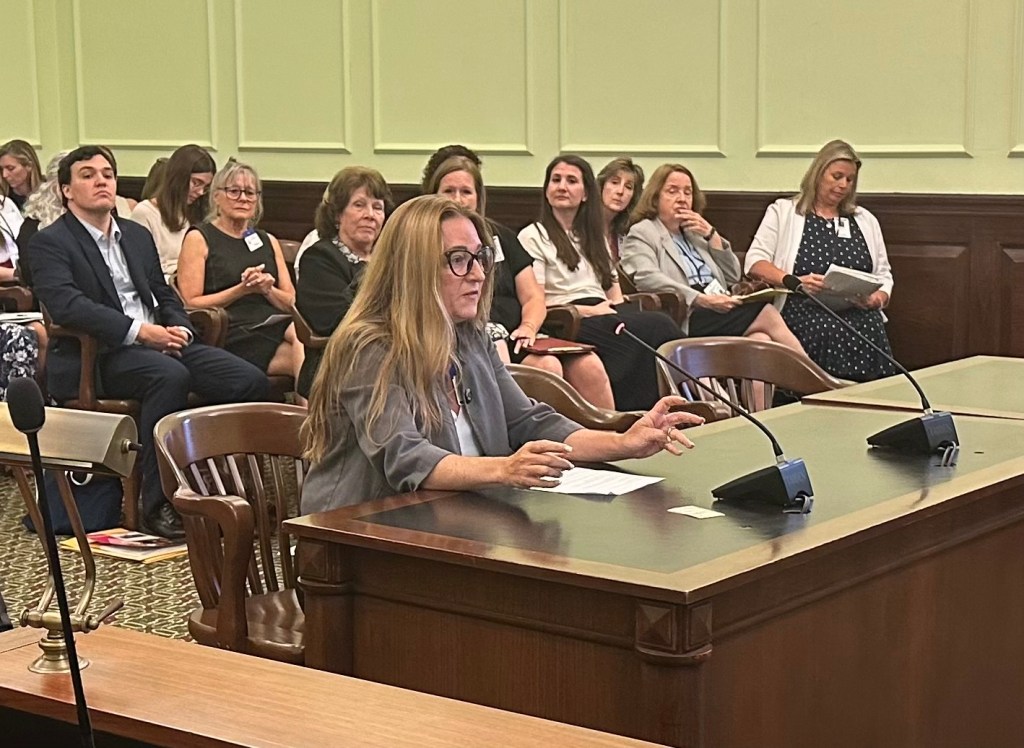
The Faculty Association of Monmouth University (FAMCO AFT-AAUP Local 6627) joins in solidarity with NJ AFT and NJ AFL-CIO in our support of SB 1054, requiring the inclusion of labor movement history in social science curricula in grades 6-12!
Thanks to the strong leadership of Senator Vin Gopal and Senator Linda Greenstein, co-sponsors of this important initiative, the bill was successfully voted out of the Senate Education Committee today!
A shout out to our own Dr. Lisa Dinella for testifying before the committee on behalf of FAMCO, and for sharing our gratitude to Senators Gopal and Greenstein for their commitment to ensuring an inclusive American history curricula for our students!
-
Happy Juneteenth National Independence Day!
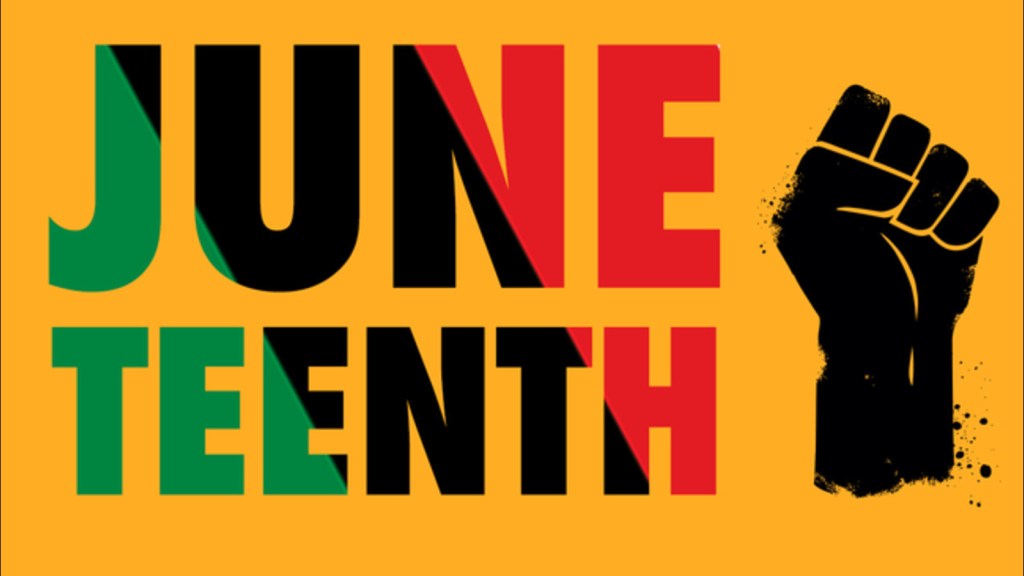
Juneteenth marks the emancipation of enslaved African Americans in the United States. On June 19th in 1865, Union soldiers arrived in Galveston, Texas, to announce that the Civil War had ended and that all enslaved people were now free—two and a half years after the Emancipation Proclamation was signed.
Juneteenth is a celebration of freedom, resilience, and the relentless pursuit of justice. It is a reminder of the struggles that African Americans have faced and continue to face in the fight for equality. This day also serves as an opportunity for the labor movement to reaffirm its commitment to social and economic justice for all workers.
The labor movement has long been intertwined with the fight for civil rights. From the historic marches of the 1960s, where unions stood shoulder to shoulder with civil rights activists, to the ongoing struggles for fair wages and safe working conditions, our collective efforts have always aimed to lift up those who are marginalized and oppressed.
On Juneteenth, we honor the contributions of Black workers who have been instrumental in shaping the labor movement. Their courage, strength, and perseverance have paved the way for many of the rights and protections we enjoy today. We must also recognize that the journey is far from over. Systemic racism and economic inequality continue to affect Black workers disproportionately.
As union members, we must use this day to educate ourselves, advocate for policies that promote equity, and stand in solidarity with our Black brothers and sisters. This means pushing for diversity within our unions, ensuring fair representation, and addressing the unique challenges faced by workers of color.
Juneteenth is not just a celebration of freedom; it is a call to action. As we honor this day, let us recommit ourselves to the fight for justice, equality, and dignity for all workers. Together, we can build a labor movement that truly represents and uplifts every member of our diverse community.
-
Bargaining Update #3: FAMCO Tentatively SEALs Key Non-Economic Deals!
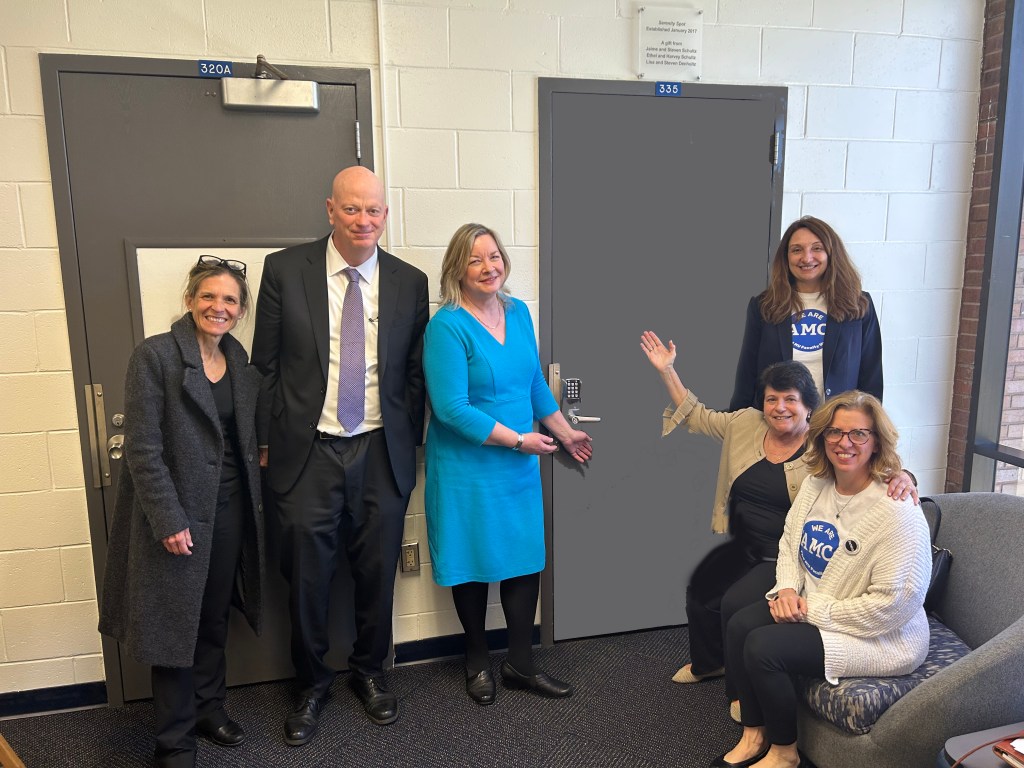
This week, the FAMCO bargaining team is pleased to announce that we have come to a tentative agreement with the administration on our platform of non-economic proposals, marking a significant turning point in our nearly four months of negotiations on key issues that we know are important to our membership. As we move closer to negotiations around the squarely economic issues of healthcare and compensation that continue to resonate most deeply with faculty, we are encouraged by this recent positive momentum.
In our work to protect and promote stability, accountability and professional autonomy, we have successfully tentatively agreed to:
- establish full-time faculty’s right to first refusal in the scheduling of courses in all terms;
- re-establish the formal labor-management committee to examine fair and effective teaching evaluation tools;
- ensure faculty’s right to decline eCampus adoption for in-person classes beyond posting syllabi or when choosing to communicate any grading or assignment information electronically;
- provide greater contractual assurances against the outsourcing of the academic mission through a written declaration of “no intent” to engage in contracts with online program management corporations (OPMs) and requirement to provide notice if otherwise.
In our work to protect and promote equity and fairness, we have successfully tentatively agreed to:
- re-establish the formal labor-management committee work to promote equity and diversity in faculty hiring and promotion;
- ensure appropriate and fair mechanisms for rebuttal for faculty moving through the reappointment, tenure and promotion process;
- strengthen both parties’ contractual commitments to shared values in ensuring a non-hostile, non-toxic workplace.
In our work to protect and promote professional respect and livelihoods with dignity for all our members, we have tentatively agreed to:
- sustain the COVID compassionate review provisions for faculty whose trajectory toward reappointment, tenure and promotion may have been negatively impacted by the pandemic;
- clarify and strengthen important due process procedures in the formal grievance process;
- ensure protections for faculty against investigation without notice to the Office of the General Counsel;
- improve the mechanisms for timely and responsive communication between faculty and the administration through the establishment of a regularly standing labor-management committee.
Kudos to FAMCO Observers!
Thank you to the members below who have turned out in person to support us during our sessions! All are welcome to observe the work of bargaining our collective agreement, and your presence matters. See below for how you can join us!
What’s Next?
In the days and weeks ahead, we may hear concerns from senior administrators about current enrollment numbers and the potential impact on the university’s financial health. We encourage you to stay closely connected to FAMCO for a full understanding of the fiscal landscape, including the reality that Monmouth University continues to be financially able to support faculty and staff with the compensation increases and healthcare benefits we deserve.
As we have done with the non-economic proposals, we will be looking to the University to continue our momentum of finding a path forward on the economic issues at stake for our members.
Do Your Part to Win a Strong Contract!
A union’s bargaining team at the table is only as strong as the members who are doing their part away from the table to win a fair contract for themselves and their colleagues! Let us know you are willing to do your part in the next round of economic negotiations by reaching out to FAMCO field team coordinator, Sanjana Ragudaran (sragudar@monmouth.edu), or FAMCO lead negotiator, Johanna Foster (jfoster@monmouth.edu).
Stay tuned for more opportunities for upcoming action trainings this summer and be sure to follow us on Facebook (Monmouth University FAMCO) and on Instagram @ mu_famco.
Go FAMCO!
-
Happy Memorial Day!
We gather on Memorial Day to honor the brave men and women who have made the ultimate sacrifice in service to our country. Their courage and commitment remind us of the values we hold dear: freedom, justice, and the relentless pursuit of a better future for all.
As we enjoy time with our families and friends, let’s remember that the benefits we often take for granted—like weekends, overtime pay, and safe working environments—were not handed to us freely. They were fought for by those who came before us, many of whom were veterans who carried the spirit of service and sacrifice from the battlefield to the workplace.
On this Memorial Day, let’s draw inspiration from their legacy. Unions are part of a long tradition of fighting for what is right, ensuring that the values that fallen heroes defended are upheld in every aspect of our lives, including the workplace. Their sacrifice impels us to stand firm in our resolve, knowing that the progress we achieve today will shape the future for generations to come.
As we honor the memory of veterans who have fallen, we also renew our commitment to each other. We are stronger together, and collective action will pave the way for a more just and equitable workplace. This Memorial Day, let’s remember that our struggle for workers’ rights is a way to honor the sacrifices made for the freedoms we enjoy. Happy Memorial Day!
-
Bargaining Update #3: May 15

This Wednesday, May 15, the FAMCO Bargaining Team conducted our sixth negotiating session that lasted 7 hours. Present for the administration’s team were Provost Rich Veit, Associate Provost Susan Gupta, VP Christine Benol, VP Joseph Pingitore, VP Jim Pillar, MU General Charlene Diana, and Senior Paralegal Karen Morrow. As a reminder, leading the negotiations for the administration, despite the substantial allocation of senior management time and university resources to their bargaining team, is attorney John Romeo from Gibbons Law, an external law firm President Leahy has retained to negotiate against the MU faculty.
First, the good news is the FAMCO bargaining team has made some important progress on non-economic proposals we have presented to the administration in previous bargaining sessions. Among others, we have signed tentative agreements on a number of proposals that provide increased accountability in ensuring due process in grievance proceedings; continued COVID compassionate review provisions; expanded contract language that asserts the parties’ shared values in ensuring a non-hostile, non-toxic workplace; and protections for faculty against investigation without the notice to general counsel. In addition, the administration agreed to accept our proposal on priority scheduling that will now protect full-time faculty’s right to have first priority in all course selections in all terms, not just the summer sessions, before administration can consider calling on adjunct labor.
However, the FAMCO bargaining team has also shared proposals important to our members that the administration has yet to fully address, at times arguing that they are holding their counters until the parties have entered deliberations over more squarely economic matters, and at other times, simply not coming prepared with a full response. At the last bargaining session, we put significant pressure on the administration to respond to our proposal to address the specific needs of our clinical faculty that the administration initially deemed economic, and a preliminary discussion was able to begin. We will continue to press for a substantive response in upcoming sessions.
Similarly, FAMCO’s proposal to create a more stable work environment by decreasing the number of adjunct faculty, increasing the number of tenure track lines, and providing a pathway to tenure for our full-time non-tenure track faculty who choose to apply, has also been deemed largely economic, and a full response from the administration has yet to be provided. In providing preliminary feedback on this proposal, the administration has insinuated that overreliance on contingent instructional labor at Monmouth is a result of necessary cost-cutting measures the administration needs to make to offset their willingness to allocate course reductions to full-time faculty and to permit tenure stream faculty to retain a 3-3 load (as opposed to a 4-4). We will continue to listen closely for any circular reasoning that suggests that Monmouth University has little choice but to save the institution of tenure by undermining it through the persistent overreliance on contingent labor.
Additionally, FAMCO shared a proposal that would afford our senior lecturers and senior specialists an appropriate level of professional respect and dignity in the review process, a proposal that, at present, the administration has found to be unacceptable to them. We await their counter to that proposal, or a confirmation that they are refusing to engage further here.
On our list of troubling developments, the administration shared several non-economic proposals that would limit academic freedom of our faculty and expose our students further to the predatory practices of EdTech companies. On key items here, the administration has acknowledged that “we have a fundamental disagreement” when it comes to these proposals.
Overall, on the positive side, we have been able to make recent progress on non-economic proposals that we know will benefit our members. We are committed to resuming our discussions on a number of proposals that the administration continues to slow walk or hold, for the time being.
WHAT’S NEXT?
In anticipation of upcoming discussions of our economic proposals, the FAMCO team has been reviewing financial and healthcare benefits data provided by the University. In doing so, it is clear that MU faculty salaries have not kept up with inflation in the period covering our current contract (2021-2024). Collectively, MU full-time faculty lost a total of 1.3 million in salary, with an average individual loss of $6,573, in just the single academic year of 2023-2024. For context, for the three-year period between 2019-2022, President Leahy, alone, received $2,767,217 in total compensation.
SHOWING UP TO S.E.A.L. THE DEAL!
A special shout out to our members who have been willing to step up as observers and support us all in our efforts to win a fair agreement (check out some of our committed members below!). Their presence in the negotiating room has been our strength!
Finally, did you see that FAMCO sent congratulations gift packages to the renowned artists honored during the 2024 Bruce Springsteen Center Awards Ceremony this April? This year, the Center selected award recipients for, among other amazing contributions, their notable commitments to social justice. In our notes of congratulations, we welcomed the award winners into the Monmouth community, and assured them that Monmouth has a faculty union that also shares their recognized and important commitments to equity and fairness!
If you’d like to support us by being an observer during bargaining, or you are ready to do your part in some other way to win the strong contract that you and your colleagues deserve, please contact our field organizer Sanjana Ragudaran at sragudar@monmouth.edu
-
Happy May Day!

May Day is a day steeped in the history of workers’ struggles and victories. It’s important for us to reflect on the significance of this day and harness its spirit in our everyday life, including current contract negotiations. This international workers’ day reminds us of the enduring power of unity and the successes we can achieve when we stand together.
May Day this year comes amid, among other things, our ongoing contract negotiations. These bargaining sessions are not just about numbers and clauses; they are about Stability, Equity, Accountability, and Livelihoods with dignity, conditions that allow us not just to survive but to thrive.
May Day is a call to every working person to remember the victories of those who came before us. From the eight-hour workday to health benefits and beyond, our predecessors fought hard to win what we enjoy today. Their battles, often faced with formidable resistance, were fueled by the kind of solidarity we must continue to cultivate.
Let us draw inspiration from the resilience and unity exemplified on May Days past. Here are a few ways we can embody this spirit:
- Stay Informed and Involved: Make sure you’re up to date with the latest negotiation developments. Attend union meetings, read updates, and ask questions. An informed membership is a powerful membership.
- Show Up: Whether it’s a rally, a picket line, or a meeting, your presence matters. Physical attendance sends a clear message of unity and resolve to both our employers and fellow workers.
- Spread the Word: Talk to your coworkers about the importance of our demands. Use social media to raise awareness about our goals and the importance of solidarity. The more support we garner, the stronger our position at the bargaining table.
- Support Each Other: These times can be stressful. No one should feel alone. Check in with your colleagues, offer support, and share resources. Solidarity extends beyond negotiations—it’s about fostering a supportive community.
As we mark this May Day, let’s recommit to the ideals of solidarity and collective action. Remember that each of us plays a vital role in the strength of our union. Together, we have the power to not only negotiate but to win fair and equitable contracts that reflect our hard work and dedication.
Happy May Day, and let’s continue to fight the good fight, together!
The Faculty Association of Monmouth University
Monmouth University Faculty for Academic Freedom
Get FAMCO updates directly in your inbox.


